VPAT Reports Service
I collaborated with accessibility specialists to designed and piloted an in‑house accessibility conformance reporting service that significantly reduced cost, time, and complexity while enabling more accessibility champions to independently produce high‑quality accessibility conformance reports across the organization.
Overview
✍️ My Role
UXUI designer
👥 Key Stakeholders
Accessibility, design system, product representatives, account managers, compliance
💼 Company
Background
VPATs (Voluntary Product Accessibility Template) are essential for selling Bentley products—especially to public sector clients—because they document how products meet international accessibility standards and are often required for procurement.
Challenges
High cost and long timelines: VPATs were produced by an external agency at a high cost per report, creating scalability issues.
Complex, fragmented process: VPAT creation required navigating many documents, repeated planning, and extensive evidence gathering.
Limited internal capability: Few internal champions were trained or confident enough to produce VPATs independently.
The Solution
I worked with accessibility specialists to bring VPAT production in-house, replacing external consultancy with a structured, scalable service model. We designed and validated a playbook with 4 product teams to standardize learning and reporting, introduced a report generator to streamline workflows and reduce documentation overhead, and piloted the VPAT reports service that streamline the training and production process for the accessibility conformance reports.
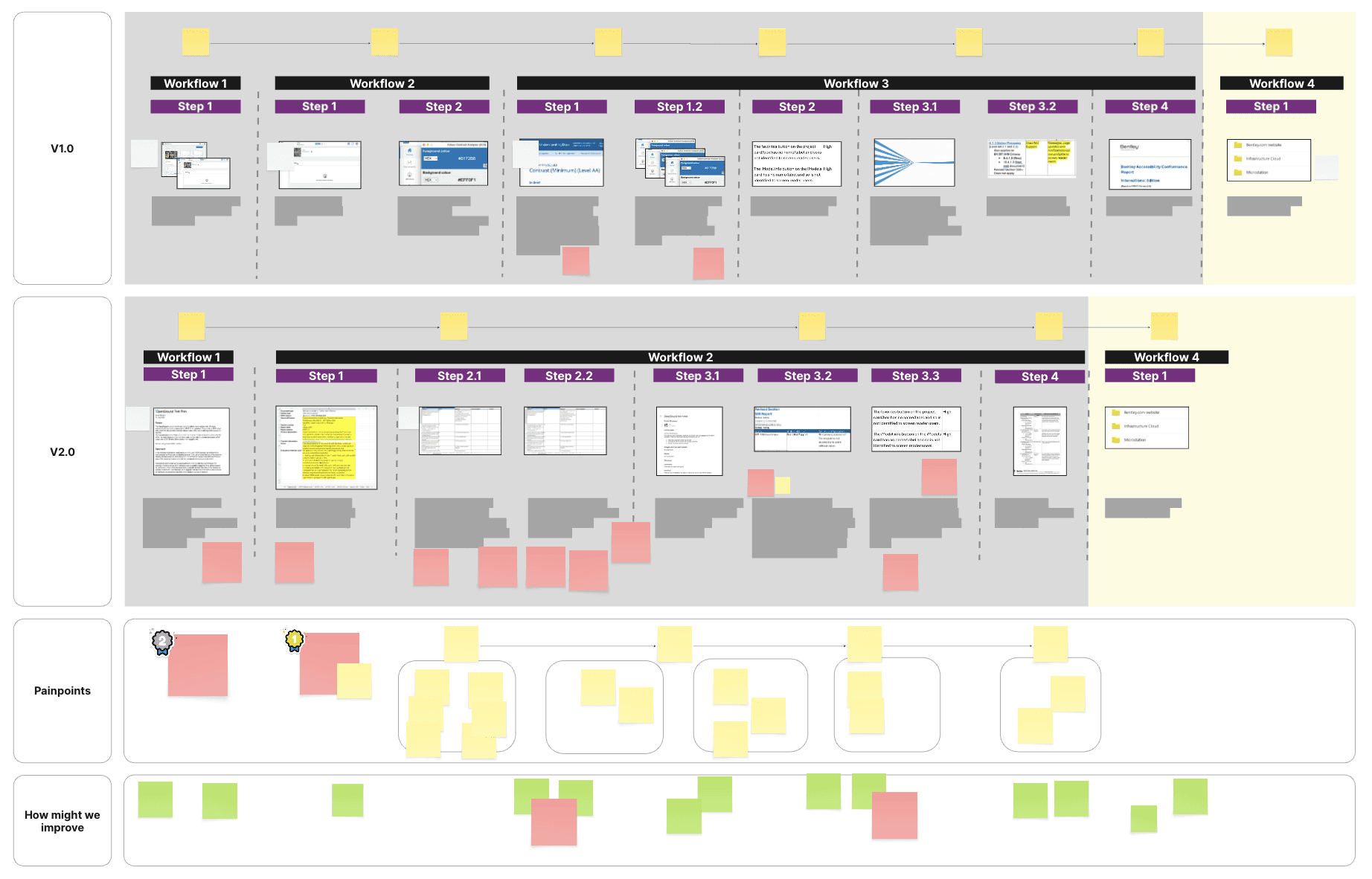
Example of VPAT service journey and ideation affinity mapping
A scalable, educator‑led accessibility service
was created as a result of this VPAT reporting pilot. It accelerated compliance and product accessibility outcomes, while improved broader accessibility awareness across product teams.
2 day
production rate
700%
efficiency gain in time and cost savings.
23 tests
reduced from 100+ test scope
The Process
Key personas
From research, we have identified the personas below who would played the key role in the VPAT production.
Product Representative
PR
Runs tests on their machine
Does testing and filles out results
Accessibility Specialist
AS
Directs the product representative
Helps interpret results
“I want to produce my product's VPAT quickly and easily.”
Product Representation
“We want to guide product teams to product a VPAT themselves.”
Accessibility Specialist
Scenerio
PR
Amina is a midweight UX designer for product A which needs to have a VPAT. She has never done any accessibility testing before has basic WCAG knowledge. She wants to get started easily and quickly to provide clear results. She will need some additional support from accessibility specialist.
Expectations
PR
Clear guidance on what is a VPAT, what's required, and how to do basic testing
Ability to deliver a VPAT report in a short time frame
Friendly and helpful accessibility support
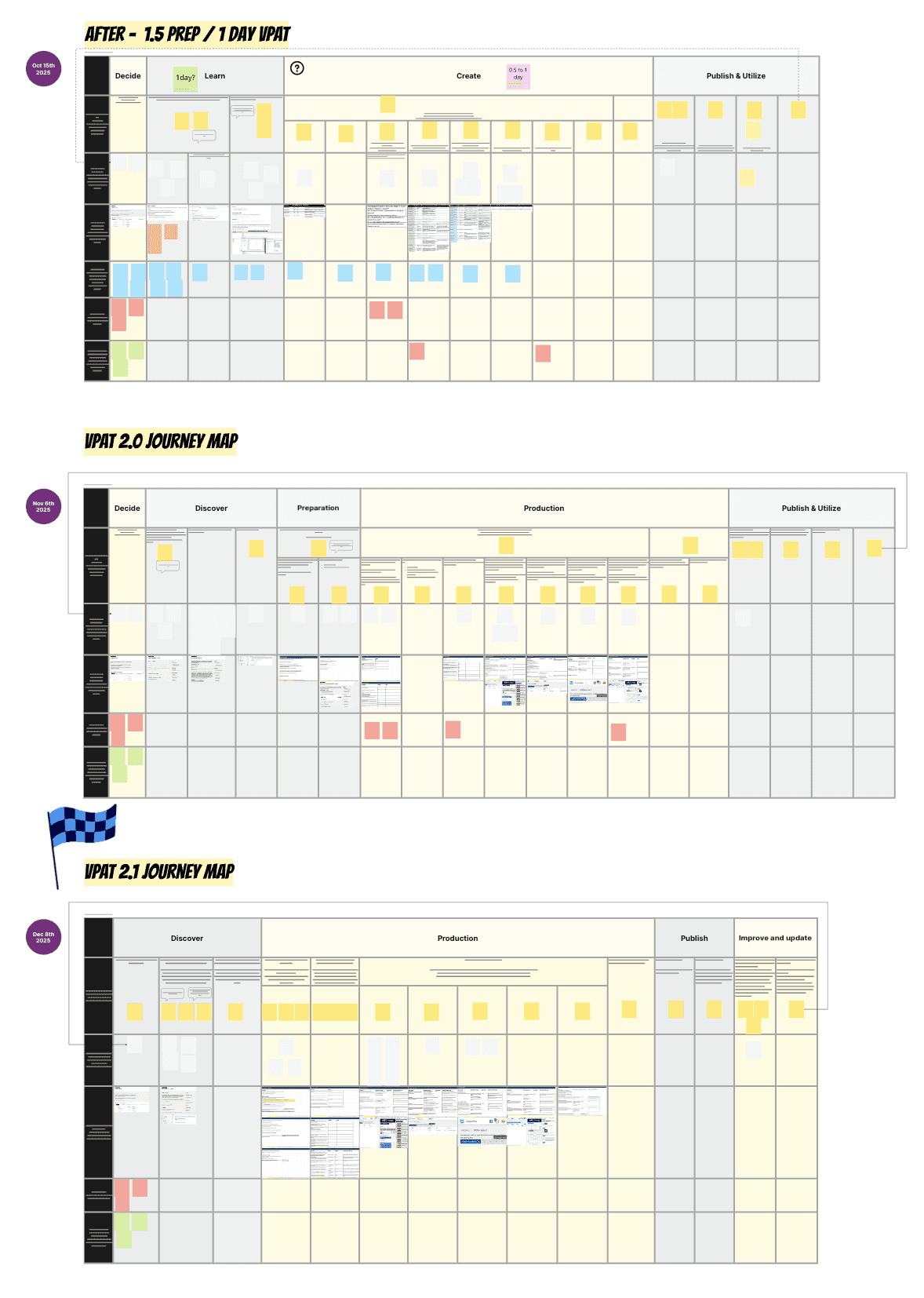
VPAT service journey mapping
I led the service journey mapping, defining clear stages from preparation to reporting and improvement—based on the live VPAT generator produced by accessibility specialists.
The process spanned three months as specialists designed and validated multiple versions of VPAT generators. We ran regular workshops to review and refine the workflow. Our goal was to gather targeted feedback on process steps and stakeholder roles, identify pain points, and co-create solutions that make the VPAT process clearer, faster, and more inclusive.
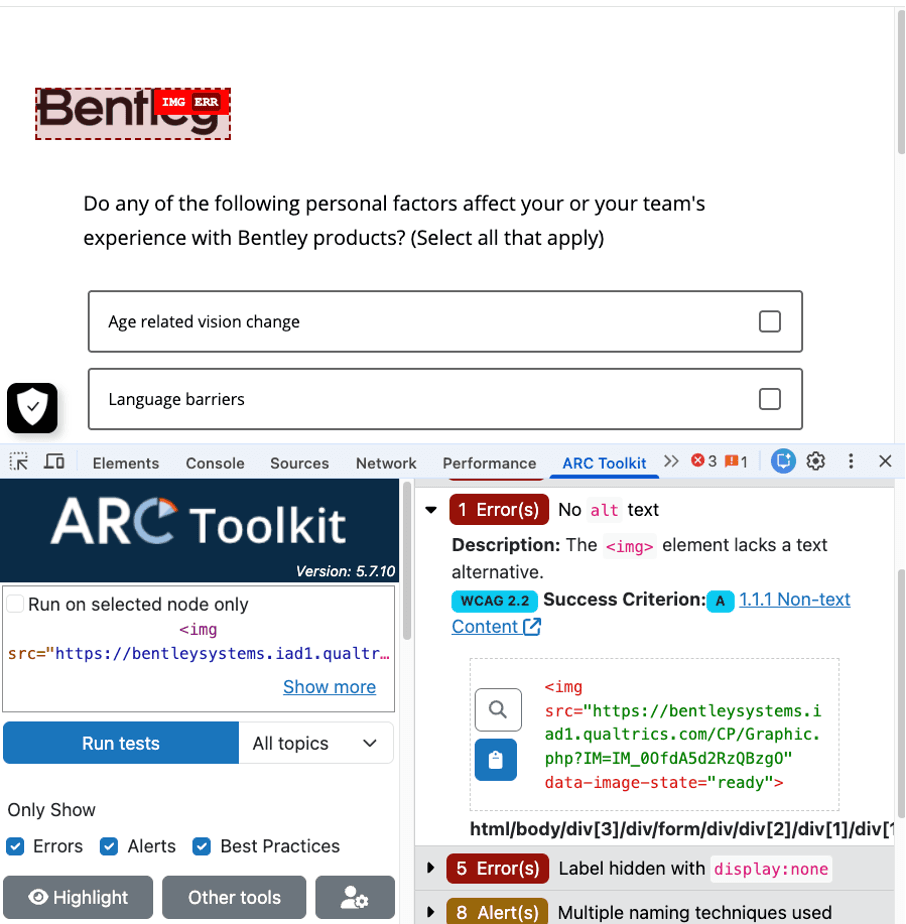
I also supported automated accessibility testing and embedded evidence gathering directly into the reporting workflow to reduce friction.
Accessibility Testing guidelines
I collaborated with accessibility specialists and UX peers to design scalable guidance and test the playbook in real VPAT scenarios.
To begin, I attended professional accessibility training and became the first Bentley colleague to achieve IAAP CPACC certification. I also created a collaborative Miro board to share exam preparation resources, promoting accessibility knowledge across the organization.
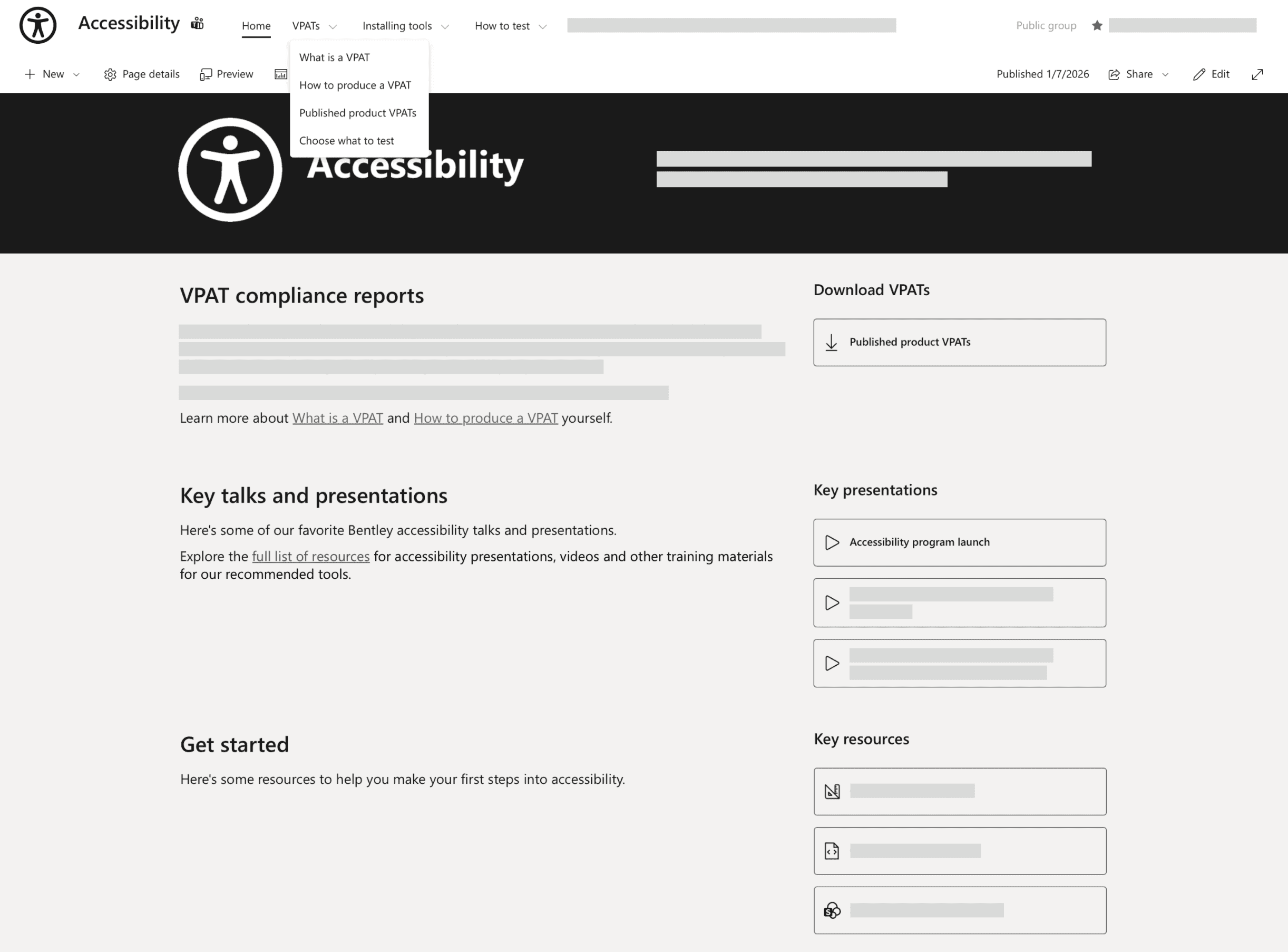
SharePoint VPAT guidance hub
I led the launch of the Accessibility SharePoint site, focusing on the VPAT guidance hub and creating a single source of truth for champions onboarding to the service.
Reflection
Challenges and Takeaways
I successfully passed the IAAP CPACC exam and contributed to making accessibility more scalable at Bentley.
Hands-on experience taught me that inclusive design is a mindset that becomes deeply ingrained, not just a principle.
Securing product resources for accessibility required tying initiatives closely to business needs, and I'm excited to apply inclusive principles across UX design and research to build deeper connections with end users.
Feedbacks
“This is forward thinking and pragmatic.”
“This seems like a sensible and pragmatic approach to a clear business need.”
“This service helps involve BIC teams to produce their own VPATs.”
© 2026 by Lynn Qian